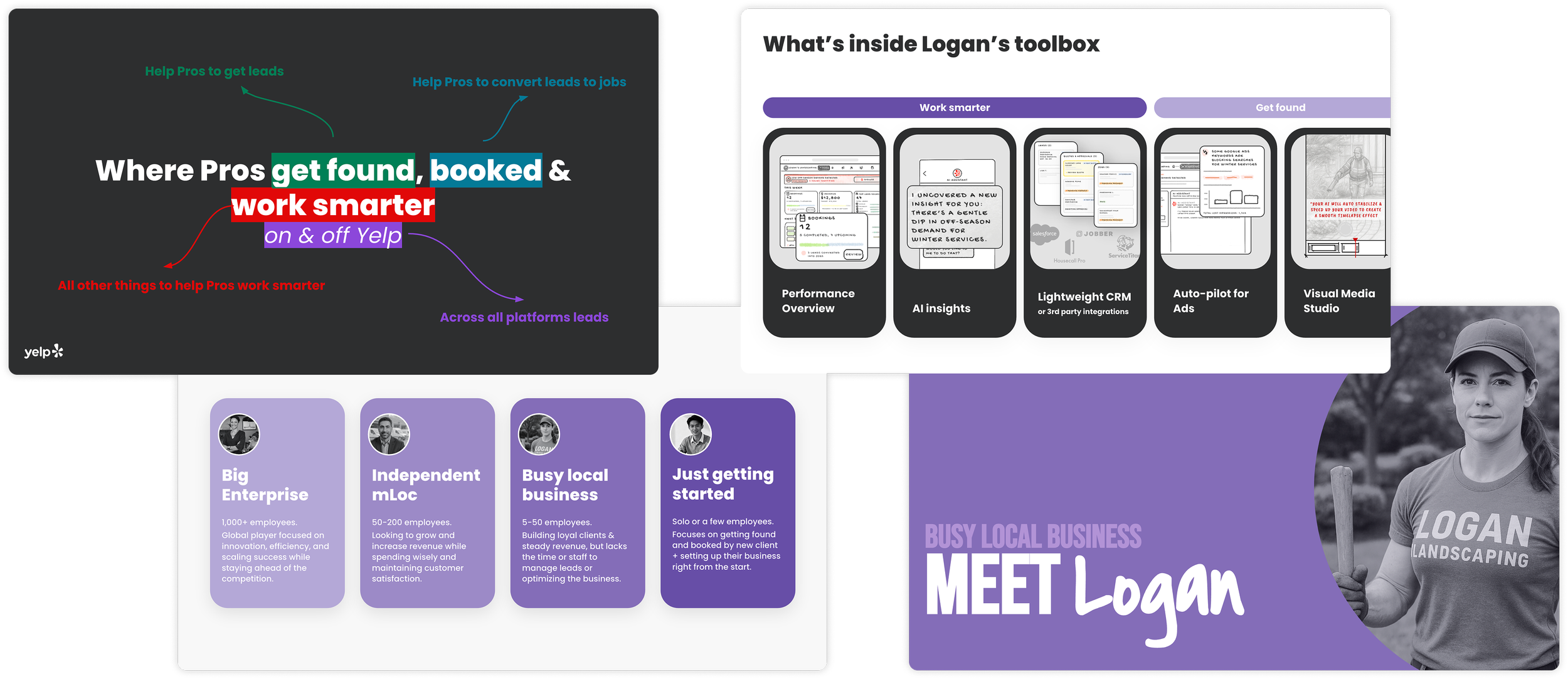
Yelp's Business-Side 3-Year Vision
Charting a New Product Direction for Local Pros
CHALLENGE
Facing consumer headwinds and a rapidly changing AI-powered advertising landscape, Yelp was exploring a strategic down-funnel expansion beyond its traditional user-generated content ads-based business model, to help help local pros manage and convert their leads more effectively. Leadership needed a cohesive vision to align the organization around this new direction before it could be built as we moved towards planning for 2026 and beyond.
my role
Working alongside a design director and lead product manager, with a small cross-functional VP group providing feedback, I translated a roadmap emerging from stakeholder workshops into a visual narrative that could communicate a compelling strategy to senior leadership and the Product/Engineering/Design organization at large.
My contributions spanned:
System design — Developed a net-new UI framework to show how proposed SaaS features could integrate cohesively within Yelp, and work in concert with one another
Storyboarding the arc of the presentation
Narrative framing to center the user experience as strategic entry point
Illustration of future-state UI concepts, grounded in the framework above
OUTPUT
A strategic vision deck reviewed by the CPO, shared with the C-level leadership team, and I co-presented with my design director at Yelp's joint Product and Engineering retreat in the third quarter of 2025.
Approach
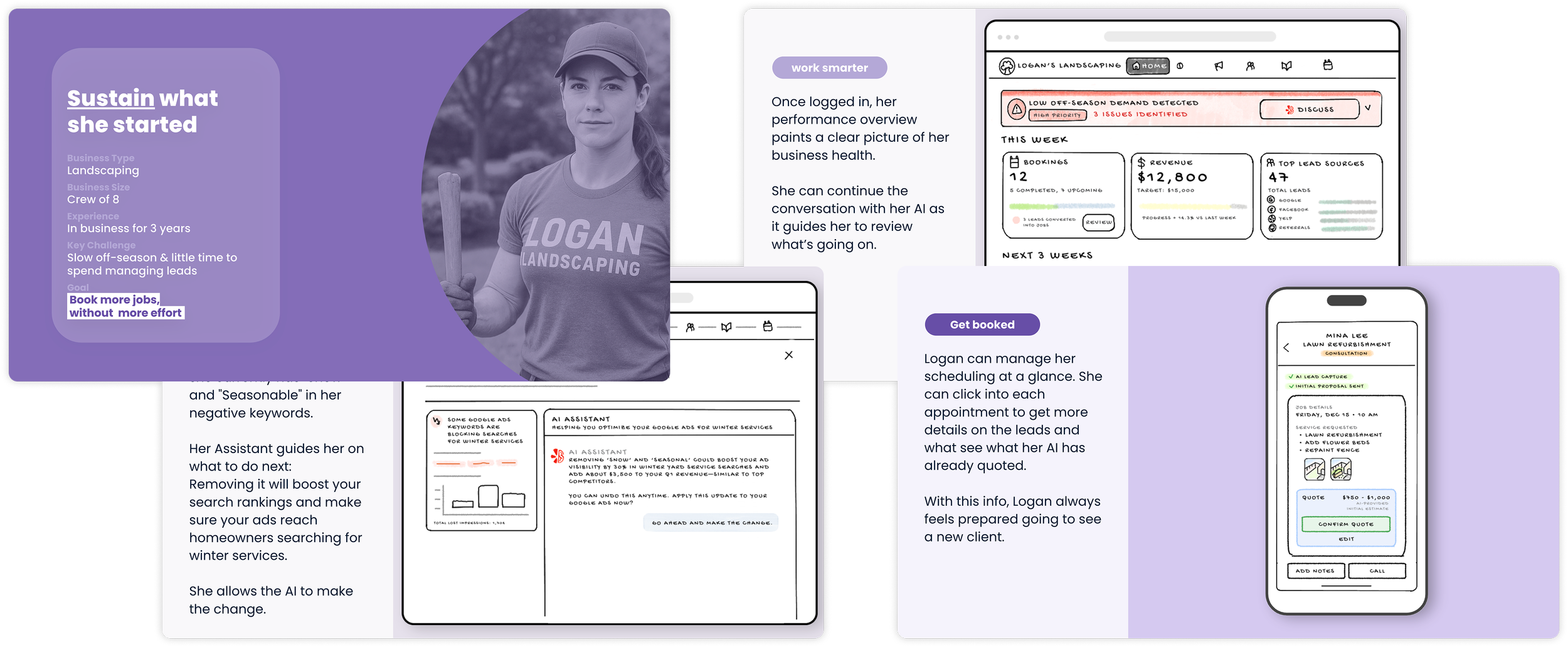
1. Just enough detail
The deck’s ultimate purpose was to build alignment over a shared vision. We needed to strike the right balance of detail, to keep discussions focused on strategy over implementation debates.
2. Creating a compelling & realistic persona
I made a deliberate choice to ground the vision through the eyes of the users it was built for. The artifact that allowed executives and team members at the IC-level to follow a key customer who threaded Yelp’s future-facing features through her daily operations as a small business owner, allowing us to anchor strategy within empathy.
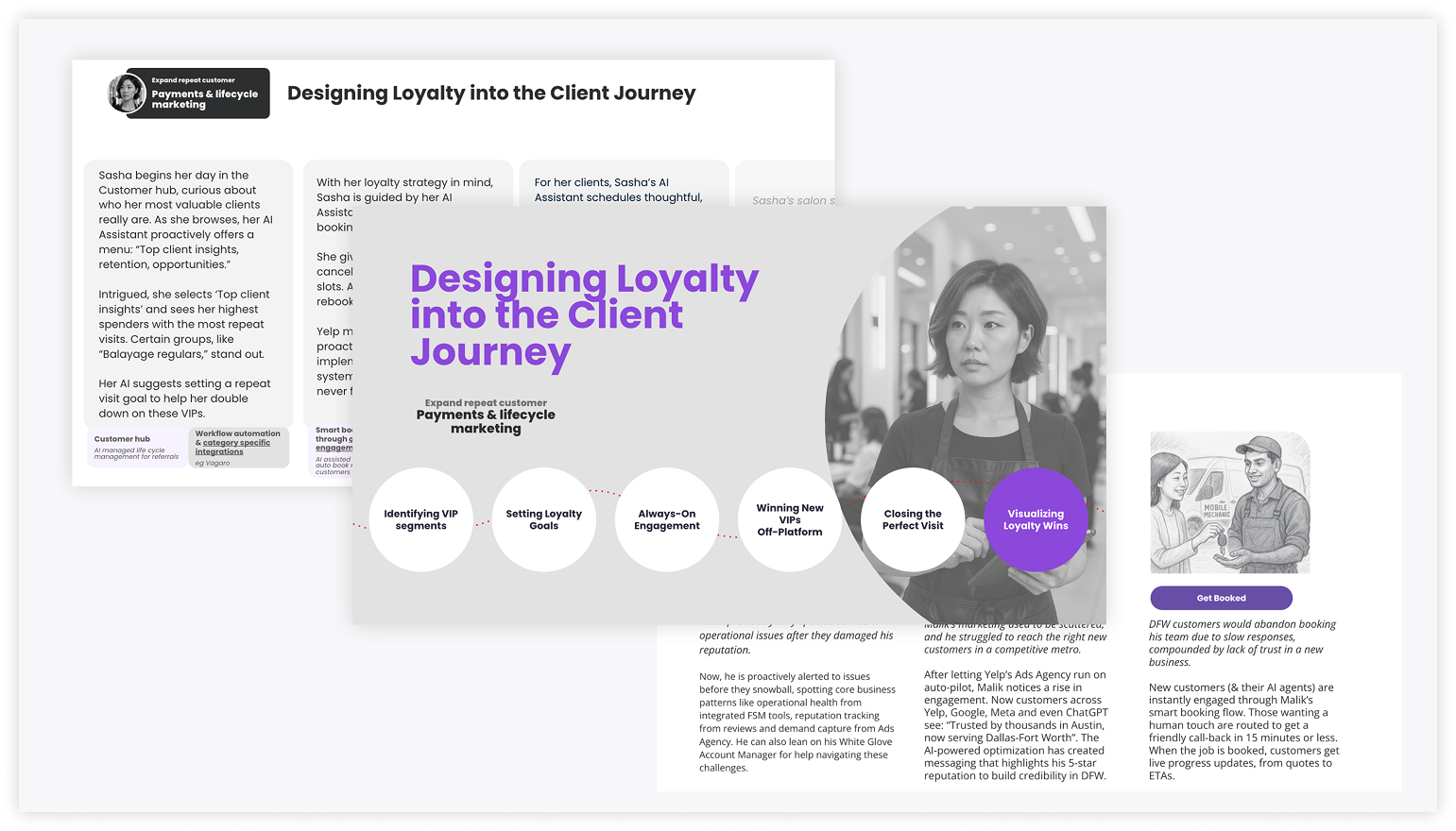
A snapshot of iterative persona development & storyboarding. Ingredients: insights from past studies, user data and conversations with customer-facing teams.
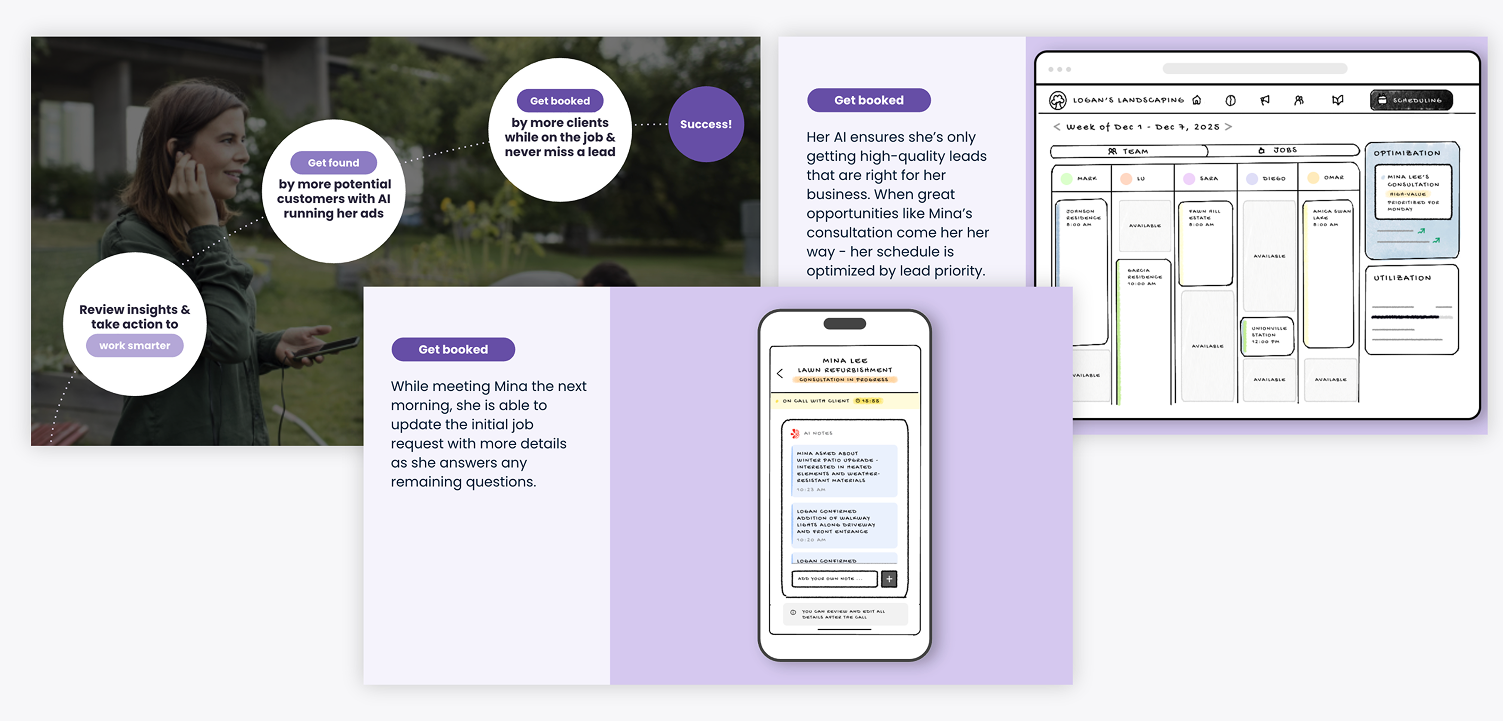
3. Telling a cohesive story
Knowing that audiences respond better to a unified experience rather than a series of disconnected ideas, I created an underlying system as the skeleton to hold up the persona’s user journey. Rather than leap from one disconnected screen to another, the resulting illustrations tell a story on their own that complements the presentation text:
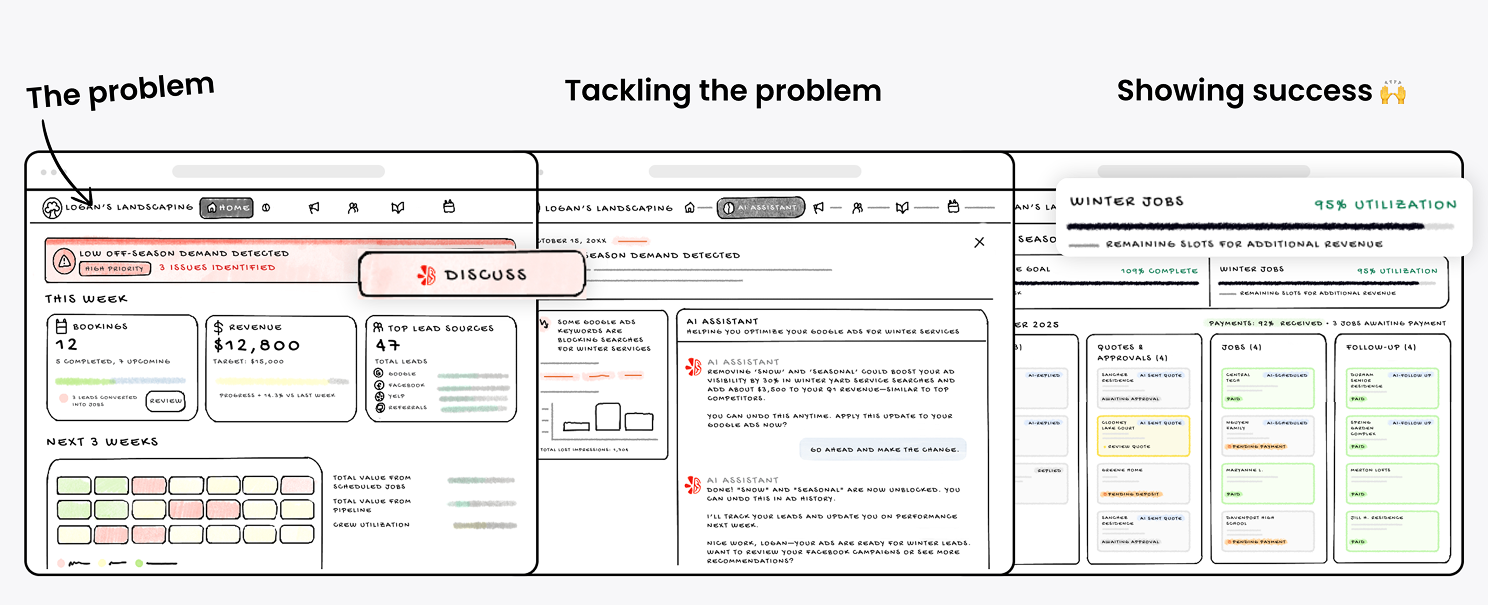
Illustrations were intentionally hand-drawn in style to evoke possibility, a hedge against granular feedback coming in too early.
Organizational skill-sharing
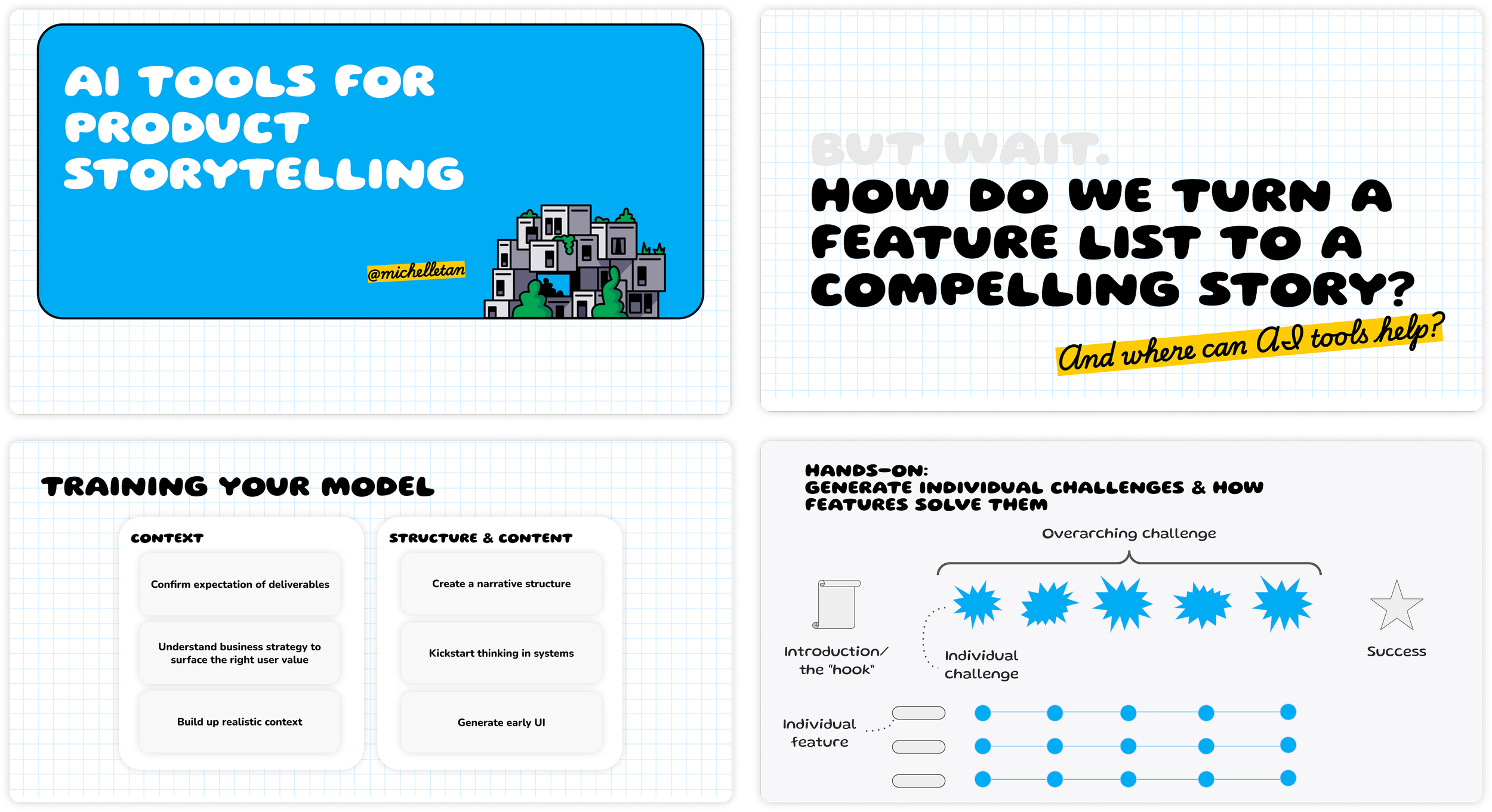
As a byproduct of this work, I developed and facilitated an internal workshop on using AI for storyboarding — contributing to AI tool adoption across the product org.
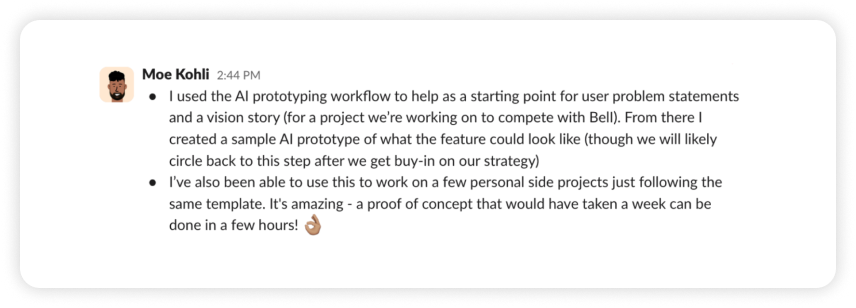
Positive feedback from a design manager, one of my workshop attendees.